Historical Conquest’s Adventure Box Podcast
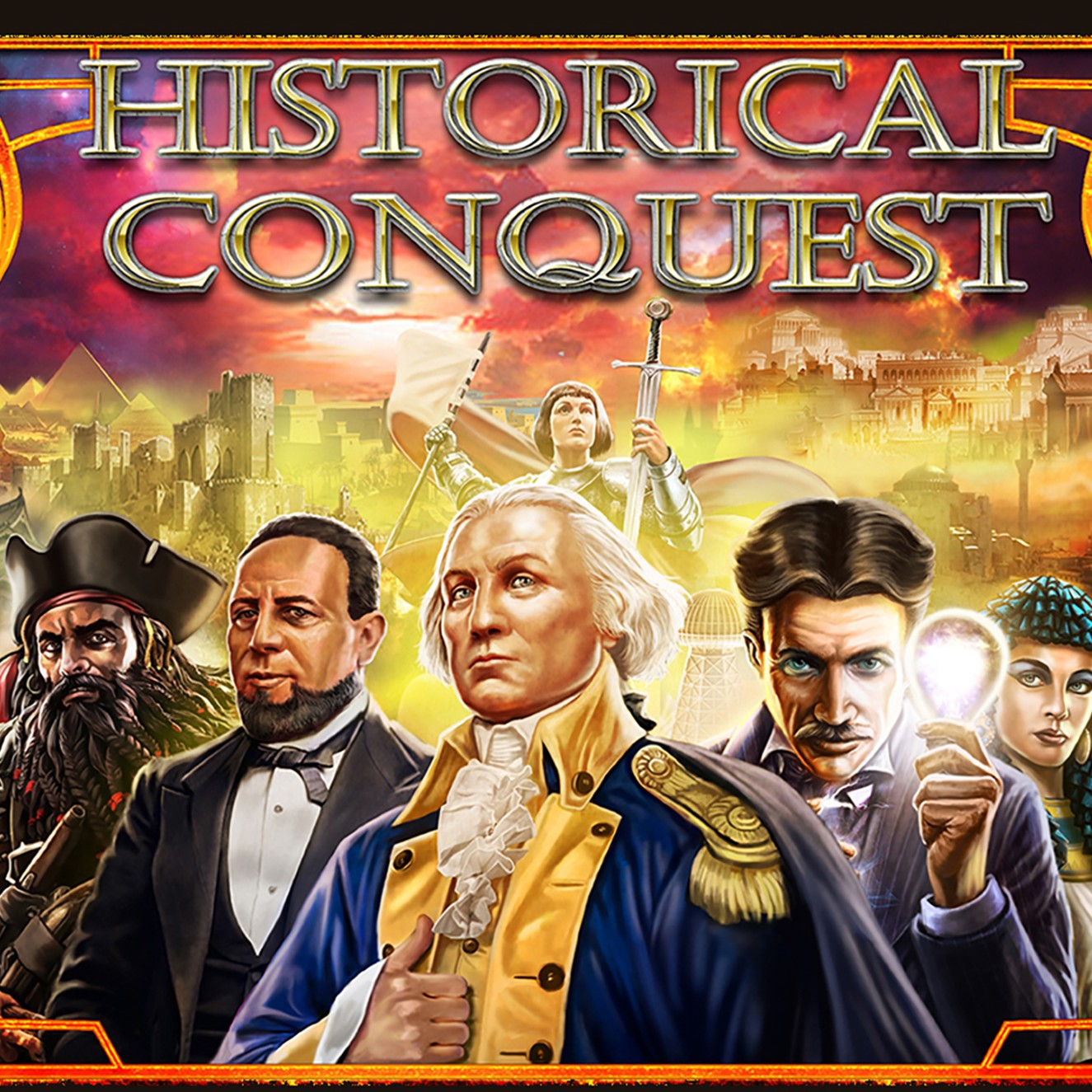
Welcome to an exciting journey through American History, inspired by our wildly popular Adventure Box Curriculum, available at www.HistoricalConquest.com. But don’t worry if you haven’t grabbed your copy yet—you’re still in for a thrilling ride. We’re starting from the very dawn of history, tracing the stories from the ancient Olmecs all the way to modern times. Instead of just skimming the surface, we’ll dive deep into the lives of those who shaped history, uncovering the personal tales behind the events. So, tune in, stay curious, and don’t hesitate to ask questions—adventure awaits!
Listen on:








Episodes
Episodes


Saturday Mar 29, 2025
Saturday Mar 29, 2025
Athens and Sparta: The Rivalry Before the Peloponnesian War
The relationship between Athens and Sparta before the outbreak of the Peloponnesian War (431–404 BCE) was complex, shaped by moments of cooperation, mutual suspicion, and growing animosity. These two city-states were the most powerful in Greece, yet their stark differences in government, culture, and military strategy created a fragile balance that ultimately collapsed into open conflict.
Allies Against a Common Enemy
Despite their differences, Athens and Sparta had worked together in the early 5th century BCE during the Persian Wars (499–449 BCE). Sparta, known for its highly disciplined army and oligarchic government, and Athens, with its powerful navy and democratic system, joined forces to repel the invasions of King Darius I and later Xerxes I of Persia. The Battle of Marathon (490 BCE) saw Athens successfully fend off the Persians without Spartan assistance due to a religious festival. However, by the time of the Battle of Thermopylae (480 BCE) and the decisive Greek victory at Plataea (479 BCE), both Athens and Sparta played key roles in securing Greek independence. Sparta led the land forces, while Athens dominated the seas. This period of cooperation marked one of the few times the two rival city-states set aside their differences for a greater cause.
Diverging Paths: The Delian and Peloponnesian Leagues
After the Persian threat diminished, Athens and Sparta quickly found themselves at odds over the future of Greece. Athens took charge of the Delian League, an alliance of Greek city-states formed to defend against future Persian aggression. Initially, the league was a voluntary coalition, but over time, Athens transformed it into an Athenian Empire, using the league’s treasury (originally located on the island of Delos) to fund its own navy and infrastructure projects, including the construction of the Parthenon. Member states that tried to leave the league were forcibly kept under Athenian control, leading to resentment.
In contrast, Sparta maintained leadership over the Peloponnesian League, an older alliance of city-states in the Peloponnese that opposed Athenian expansion. While the Peloponnesian League was more loosely organized than the Athenian-controlled Delian League, its primary purpose was to check Athenian power and defend oligarchic rule against the spread of Athenian democracy.
Economic and Diplomatic Interactions
Despite their military and political rivalry, Athens and Sparta engaged in trade and diplomatic negotiations before the war. Athens, reliant on imports due to its growing population and limited agricultural land, traded with Sparta for foodstuffs such as grain and meat, while Sparta needed Athenian luxury goods, including pottery, artistic crafts, and even some military equipment. Their economic interdependence, however, was overshadowed by growing tensions.
There were moments of peace and diplomatic efforts to maintain stability. The Thirty Years’ Peace (signed in 446 BCE) was an agreement that sought to prevent another war between the two powers, following a series of smaller conflicts. The treaty established spheres of influence, ensuring Athens would not interfere with Peloponnesian affairs while Sparta would respect Athenian control over its empire. However, this peace was fragile, as neither side fully trusted the other.
Tensions Leading to War
By the late 5th century BCE, tensions between Athens and Sparta intensified due to Athenian expansionism, interference in Peloponnesian affairs, and ideological differences. Athens, under Pericles, implemented the Megarian Decree (c. 432 BCE), a form of economic sanctions against Megara, a Spartan ally. This effectively strangled Megara’s economy and angered Sparta, which saw the decree as an aggressive move by Athens. Additionally, Athens supported Corcyra (modern Corfu) in a dispute against Corinth, another Spartan ally, further straining relations.
Sparta, meanwhile, grew increasingly concerned about Athens’ growing naval dominance and its influence over smaller Greek city-states. Spartan allies pressured their leaders to take action against Athenian aggression, and by 431 BCE, Sparta issued an ultimatum demanding that Athens lift its sanctions against Megara and cease its expansionist policies. Athens refused, and war became inevitable.
Before the Peloponnesian War, Athens and Sparta maintained a delicate relationship of cooperation, competition, and conflict. While they had once stood together against the Persian Empire, their differing visions for Greece’s future ultimately drove them apart. Their economic ties and diplomatic agreements were not enough to prevent war, as underlying ideological, military, and political differences made a long-term peace impossible. The Peloponnesian War would not only determine the fate of Athens and Sparta but also reshape the Greek world for generations to come.
Wednesday Mar 26, 2025
Wednesday Mar 26, 2025
Native American Alliances After the American Revolution
Following the American Revolution, Native American tribes faced an increasingly aggressive push from the newly formed United States to expand westward. The Treaty of Paris (1783) had ceded vast Native-held territories to the U.S. without consultation or consent, intensifying conflicts as settlers moved into tribal lands. In response, several Native American alliances formed to resist U.S. expansion and protect their territories, cultures, and sovereignty. Among these were the Western Confederacy, Tecumseh's Confederacy, and smaller regional coalitions.
The Western Confederacy (1785–1795)
One of the earliest and most significant Native alliances formed after the American Revolution was the Western Confederacy, a coalition of tribes from the Great Lakes region and the Ohio Valley. This confederacy emerged as a direct response to American encroachments on Native lands and the failure of the U.S. government to honor previous treaties.
Member Tribes:
Shawnee
Miami
Delaware (Lenape)
Wyandot
Ottawa
Ojibwe
Potawatomi
Kickapoo
Sauk and Fox
Goals:
The Western Confederacy sought to create a united front against American settlers and military forces, advocating for a return to the Ohio River as the boundary between Native and American territories. They viewed unity as essential to resisting the U.S. government's policy of westward expansion.
Key Events:
Treaty of Fort Stanwix (1784): U.S. attempts to claim Native lands through treaties provoked outrage among tribes excluded from negotiations. This galvanized efforts to form the confederacy.
Battle of Fallen Timbers (1794): The Western Confederacy suffered a decisive defeat to General Anthony Wayne's forces, leading to the Treaty of Greenville (1795), which ceded much of Ohio to the United States. Despite the loss, the alliance demonstrated the power of intertribal unity.
Tecumseh’s Confederacy (1808–1813)
One of the most well-known Native American alliances formed in the post-Revolutionary period was Tecumseh’s Confederacy, led by the Shawnee brothers Tecumseh and Tenskwatawa (the Prophet). This pan-tribal movement aimed to resist U.S. expansion and create a unified Native nation.
Member Tribes:
Tecumseh’s Confederacy extended beyond the Ohio Valley and included tribes from the Great Lakes, the Southeast, and parts of Canada, such as:
Shawnee
Potawatomi
Miami
Kickapoo
Delaware (Lenape)
Ojibwe
Sauk and Fox
Creek (Muscogee)
Goals:
Tecumseh envisioned a confederacy where all tribes shared a common goal of rejecting U.S. land treaties, which he argued were illegitimate unless all tribes consented. The movement also sought to revitalize traditional Native cultures, which Tecumseh and Tenskwatawa believed had been undermined by European influence.
Key Events:
Battle of Tippecanoe (1811): The U.S. Army, led by Governor William Henry Harrison, attacked Prophetstown, the confederacy’s headquarters. Though a tactical setback, this battle further united tribes against U.S. aggression.
War of 1812: Tecumseh allied with the British, hoping to halt U.S. expansion. His leadership was instrumental in early victories, but his death at the Battle of the Thames (1813) led to the collapse of the confederacy.
Regional Alliances and Resistance Movements
Beyond these large confederacies, smaller regional alliances also formed during this period, reflecting the diversity of Native resistance:
The Creek Red Stick Movement (1813–1814):
A faction of the Creek (Muscogee) nation, known as the Red Sticks, opposed U.S. expansion and assimilation efforts. They allied with Tecumseh’s Confederacy and engaged in the Creek War, which ended with their defeat at the Battle of Horseshoe Bend.
The Seminole Resistance:
In Florida, the Seminoles formed alliances with escaped African American slaves and other tribes to resist U.S. forces in the Seminole Wars (1816–1858). These alliances blurred racial and cultural lines, creating a unique coalition of resistance.
The Black Hawk War (1832):
Led by Sauk leader Black Hawk, this alliance of Sauk, Fox, and Kickapoo tribes attempted to reclaim lands in Illinois and Wisconsin. Although ultimately unsuccessful, the war highlighted ongoing Native resistance to U.S. policies.
Challenges to Unity
While these alliances demonstrated remarkable organizational and diplomatic skills, they faced significant challenges:
Cultural Differences: Diverse languages, traditions, and political structures often complicated unity.
U.S. Divide-and-Conquer Tactics: The U.S. government exploited intertribal rivalries and offered individual tribes favorable treaties to undermine collective resistance.
European Influence: Alliances with European powers, such as the British and Spanish, provided resources but often subordinated Native goals to European interests.
Legacy of Post-Revolutionary Alliances
The Native alliances formed after the American Revolution marked a critical period of resistance in the face of overwhelming challenges. While these coalitions ultimately failed to stop U.S. expansion, they demonstrated the resilience and adaptability of Native peoples. Their efforts inspired later resistance movements and remain a testament to the enduring struggle for sovereignty and self-determination.
These alliances also influenced U.S. military strategies and policies, shaping the nation's westward trajectory. The legacy of figures like Tecumseh continues to symbolize the importance of unity and the fight for indigenous rights, both in the historical record and in contemporary movements advocating for Native sovereignty and cultural preservation.
Tuesday Mar 25, 2025
Tuesday Mar 25, 2025
Greek-Persian Relations Before the War
The conflict between Greece and Persia, which culminated in the Persian Wars (490–479 BC), did not emerge suddenly but was the result of decades of interactions, alliances, and tensions between the two civilizations. Before war broke out, Persia and the Greek city-states had a complex relationship that involved trade, diplomacy, and military engagements. The Persian Empire, led by Cyrus the Great, Cambyses II, and Darius I, sought to expand its influence into the Aegean and Greek world, while the Greek city-states, particularly Athens and Sparta, resisted Persian control. Understanding Greek-Persian relations before the war provides insight into why the two sides ultimately clashed in one of history’s most defining conflicts.
The Expansion of the Persian Empire into the Greek World
The Persian Empire, under Cyrus the Great (c. 559–530 BC), began expanding westward into Asia Minor (modern-day Turkey), incorporating the Lydian Kingdom and the Ionian Greek city-states into its growing empire. These Greek cities, including Miletus, Ephesus, and Halicarnassus, had previously been under Lydian rule and were now forced to acknowledge Persian authority.
Cyrus allowed the Ionian Greeks to maintain a degree of local governance but imposed Persian-appointed tyrants to rule over them. While some Ionians cooperated with Persian rule, others resented their loss of independence. Persian governors, known as satraps, collected taxes and imposed military levies, further straining relations with the Greek population.
During the reign of Cambyses II (530–522 BC), Persian expansion continued with the conquest of Egypt, strengthening Persian dominance over the eastern Mediterranean. However, it was under Darius I (522–486 BC) that Persia made its most significant moves into Greek affairs, leading to increasing tensions between the two civilizations.
The Role of the Ionian Greeks in Persian Affairs
The Ionian Greeks were a crucial factor in Greek-Persian relations. After Persia absorbed Lydia, the Ionian cities became vassals of the empire but were often treated as second-class subjects. Persian rulers allowed them to maintain trade and religious practices but expected loyalty and tribute.
Despite Persian control, some Ionian cities prospered under Persian rule due to trade and economic stability. However, Persian-appointed tyrants, who ruled these cities on behalf of the empire, were unpopular among the Greek citizens. These tyrants often prioritized Persian interests over local needs, fostering resentment.
The Ionian Greeks were culturally and politically linked to mainland Greece, particularly Athens, which saw itself as the protector of Greek freedoms. This connection would later play a critical role in sparking the Persian Wars.
Persian Involvement in Greek Politics
Persia did not simply control the Ionian Greeks—it also played an active role in the internal politics of the Greek mainland. As a dominant power, Persia supported factions within Greek city-states that favored Persian influence. One of the most notable examples of Persian interference was in Athens, where the former tyrant Hippias, who had been exiled by the Athenians, sought Persian help to reclaim his rule.
Hippias fled to Persia and attempted to convince Darius I to invade Greece and restore him as ruler of Athens. While this effort failed, it demonstrated that Persian leaders were willing to intervene in Greek politics to strengthen their influence. Athens, in turn, became increasingly wary of Persian expansion, reinforcing anti-Persian sentiment among its citizens.
Another example of Persian involvement was Sparta’s brief cooperation with Persia. Unlike Athens, Sparta did not engage with Persia as directly, but Persian rulers occasionally attempted to manipulate Greek rivalries to their advantage. Sparta, a dominant military power, remained largely isolated from Persian influence but watched Persian expansion with concern.
The Ionian Revolt (499–493 BC): A Turning Point
The first direct conflict between Greece and Persia came in the form of the Ionian Revolt (499–493 BC), a rebellion by Greek city-states in Asia Minor against Persian rule. The revolt was led by Aristagoras of Miletus, who initially sought Persian help for his own ambitions but later turned against Persia and incited rebellion among the Ionian Greeks.
Recognizing the threat posed by Persian control, Athens and Eretria sent ships and troops to support the revolt, despite the dangers of provoking Persia. This Athenian intervention marked the first official act of defiance against the Persian Empire and set the stage for further conflict.
Darius I swiftly crushed the revolt, burning Miletus to the ground and punishing the rebels. However, he did not forget Athens’ involvement. Viewing Athens as an enemy that had insulted Persian power, Darius vowed revenge, setting the wheels in motion for the First Persian Invasion (490 BC).
The Persian Perspective: Why Persia Wanted Greece
From the Persian perspective, Greek resistance was an act of rebellion that needed to be crushed to maintain the empire’s authority. The Aegean region was strategically and economically important to Persia, as controlling Greece would allow Persia to dominate Mediterranean trade routes.
Furthermore, Persian rulers viewed Greece’s independent city-states as chaotic and unstable compared to Persia’s vast, centralized empire. Unlike the Persians, who ruled through an imperial system, the Greeks were divided into multiple city-states (poleis), each with its own government. Persian rulers saw Athens and Sparta as small, defiant territories that refused to acknowledge the authority of the Great King.
The Persian Wars were not just about military conquest but also about imperial control and punishment. Darius I and his successor Xerxes I sought to bring Greece into the Persian fold and eliminate any future threats from independent Greek states.
Monday Mar 24, 2025
Monday Mar 24, 2025
Native Tribes of the United States Before Independence (1600–1776)
Before the establishment of the United States in 1776, the land that now makes up the country was home to a diverse range of Native American tribes, each with its own culture, language, and traditions. These tribes were spread across distinct regions—Eastern Woodlands, Great Plains, Southwest, Northwest Coast, and Arctic. They interacted with one another, often forming alliances or engaging in territorial conflicts. By the 17th and 18th centuries, European colonization brought new challenges to Native societies, including displacement, disease, and warfare.
Below is a regional overview and a mini-timeline of key events affecting Native tribes during this period.
Eastern Woodlands (East Coast)
Key Tribes:
Iroquois Confederacy (Haudenosaunee), Powhatan, Lenape (Delaware), Shawnee, Cherokee, Creek
Events:
1607: The Powhatan Confederacy encounters the English settlers at Jamestown. Initial cooperation devolves into conflicts, including the Anglo-Powhatan Wars (1610-1646), which result in the Powhatan's defeat.
1621: The Wampanoag, led by Massasoit, form an alliance with the Pilgrims at Plymouth. This alliance temporarily benefits both groups but deteriorates after King Philip’s War (1675–1678), which devastates many New England tribes.
1701: The Great Peace of Montreal is signed between the Iroquois Confederacy and French settlers, ending decades of hostilities and maintaining Iroquois neutrality in European conflicts.
1763: Pontiac’s Rebellion, a coordinated resistance led by Pontiac of the Ottawa and supported by other Eastern Woodlands tribes, aims to halt British encroachment following the French and Indian War.
Summary:
Eastern tribes often allied with or resisted European powers based on their own interests. Some, like the Iroquois, leveraged European rivalries to maintain power, while others, like the Powhatan and Wampanoag, faced devastating losses due to war, disease, and displacement.
Great Plains
Key Tribes:
Lakota (Sioux), Cheyenne, Comanche, Blackfoot
Events:
1600s: Plains tribes adopt the horse, introduced by Spanish colonists, revolutionizing their way of life and enabling efficient hunting and warfare.
1700s: Tribes like the Lakota begin migrating westward into the Plains, displacing other groups such as the Arikara and Mandan.
1750s–1770s: The Comanche expand their territory, dominating the southern Plains through a combination of horseback warfare and trade networks.
Summary:
The horse transformed the Great Plains tribes, enabling them to thrive in the vast grasslands. Territorial conflicts among tribes, such as between the Lakota and Crow, intensified as competition for resources grew. European settlers would not arrive in significant numbers until the 19th century.
Southwest
Key Tribes:
Pueblo, Navajo, Apache, Hopi
Events:
1680: The Pueblo Revolt, led by Popé, successfully expels Spanish colonists from New Mexico for over a decade, marking one of the most successful Native uprisings against Europeans.
1700s: The Navajo and Apache expand their territories through raiding and trade, adapting to Spanish and Pueblo influences.
1770s: The Spanish establish missions and forts, further encroaching on Native lands, leading to periodic resistance by the Apache and Comanche.
Summary:
Southwestern tribes had long histories of agriculture and trade, but Spanish colonization disrupted their societies. The Pueblo Revolt showed Native resilience, but by the mid-1700s, Spanish influence began to reshape the region’s cultural and political landscape.
Northwest Coast
Key Tribes:
Tlingit, Haida, Chinook, Coast Salish
Events:
1600s: Northwest Coast tribes thrive on abundant natural resources, developing complex societies with permanent villages and elaborate totem pole art.
1770s: Russian traders establish outposts in Alaska, introducing new trade goods and diseases to the Tlingit and other coastal tribes.
Late 1700s: Early European explorers and traders, including the Spanish and British, begin arriving in the region, disrupting traditional trade networks.
Summary:
The Northwest Coast tribes experienced less direct contact with Europeans until the late 1700s. Their societies, rich in cultural expression and resource management, were impacted by the arrival of traders and the spread of disease.
Arctic
Key Tribes:
Inuit, Aleut, Yup’ik
Events:
1600s–1700s: Arctic tribes maintain traditional subsistence lifestyles, relying on fishing, hunting, and whaling.
1732: Russian explorers begin trading with Arctic tribes, introducing firearms and other goods but also spreading diseases.
Late 1700s: Increasing European presence disrupts Arctic trade routes, with some tribes adapting to new tools while others suffer from resource depletion.
Summary:
The Arctic tribes were among the last to experience significant European influence. Their resilience in harsh environments allowed them to maintain their cultural traditions, though contact with Russians introduced challenges.
Timeline of Key Events (1600–1776)
1607: Jamestown is founded, initiating conflict and cooperation between the Powhatan Confederacy and English settlers.
1621: Pilgrims and the Wampanoag form a temporary alliance at Plymouth.
1675–1678: King Philip’s War devastates New England tribes.
1680: The Pueblo Revolt temporarily expels the Spanish from New Mexico.
1701: The Great Peace of Montreal ends hostilities between the Iroquois and the French.
1754–1763: The French and Indian War pits many tribes against the British; the war’s end leads to increased Native resistance.
1763: Pontiac’s Rebellion attempts to resist British expansion in the Great Lakes region.
1776: The Declaration of Independence marks the beginning of significant U.S. expansion, with profound consequences for Native peoples.
Territorial Conflicts Between Tribes
Native tribes frequently clashed over territory, resources, and trade:
Eastern Woodlands: The Iroquois expanded at the expense of the Huron and other tribes during the Beaver Wars (mid-1600s), driven by competition over fur trade routes.
Great Plains: The arrival of the Lakota displaced tribes such as the Crow and Mandan. The Comanche’s expansion similarly forced other groups to move.
Southwest: Navajo and Apache raiding often targeted Pueblo communities and Spanish settlers.
Northwest Coast: Rivalries among Tlingit, Haida, and other coastal tribes centered on access to trade routes and fishing grounds.
Native American tribes experienced significant challenges and changes between 1600 and 1776. They maintained complex societies and engaged in territorial disputes with one another even as European colonization introduced new pressures. The period was one of resilience and adaptation, laying the groundwork for future resistance to U.S. expansion. Understanding these events highlights the rich diversity and agency of Native peoples before the founding of the United States.
Thursday Mar 20, 2025
Thursday Mar 20, 2025
Reasons for Greek Colonization and Their Expansion Across the Mediterranean
The Greek colonization movement, spanning from approximately 750 to 600 BCE, was driven by a combination of social, economic, political, and cultural factors that propelled the establishment of new settlements across the Mediterranean and Black Sea regions. This wave of expansion transformed the Greek world, enabling the spread of Hellenic culture, the creation of extensive trade networks, and the establishment of interconnected communities far from the Greek mainland. Understanding the reasons behind Greek colonization offers insight into the challenges and aspirations of the ancient Greek city-states during this pivotal era.
Population Growth and Land Scarcity
By the 8th century BCE, Greek city-states began to experience significant population growth, particularly as they emerged from the economic and social stagnation of the Greek Dark Ages. This population increase created immense pressure on the limited arable land of the mountainous Greek mainland, leading to food shortages and competition for resources. Many city-states, especially those in less fertile regions, could no longer support their growing populations. Colonization offered a solution by providing new opportunities for land cultivation and subsistence farming. Settlers could establish self-sufficient agricultural communities in regions with fertile soil, alleviating pressure on the home city-state while securing resources for their survival.
Economic Needs and Opportunities
Economic motivations were a major driving force behind Greek colonization. The search for fertile land was not only about feeding settlers but also about growing surplus crops to trade with other regions. Additionally, the mainland’s limited natural resources, such as metals, timber, and luxury goods, pushed Greeks to seek these materials abroad. Colonization allowed access to areas rich in resources, such as the Black Sea for grain and metals or North Africa for precious materials like silphium. These colonies often became vibrant hubs of commerce, facilitating the development of extensive trade networks that linked Greek city-states with other cultures in the Mediterranean and beyond. The wealth generated through trade further fueled the growth and influence of Greek civilization.
Political Conflicts and Tyranny
Political instability in many city-states also contributed to the colonization movement. As Greek city-states grew, internal tensions emerged between competing factions, including aristocrats, landowners, and the growing middle class of merchants and artisans. These disputes often led to the rise of tyrants—leaders who seized power through nontraditional means and often enacted policies that alienated segments of the population. For those seeking to escape oppressive regimes or avoid civil strife, colonization offered an opportunity to start anew in a less volatile environment. Colonists could establish settlements free from the political conflicts of the mother city, creating communities where they could structure governance to suit their needs and interests.
Cultural Ambitions and the Spread of Greek Identity
Beyond practical motivations, the Greeks were also driven by cultural ambitions to spread Hellenic ideals and establish their identity in new regions. Colonization was not merely a matter of survival but also an opportunity to expand Greek culture, language, and religion across the Mediterranean world. New settlements were often modeled after the mother city, complete with similar political structures, temples, and social norms. This cultural continuity helped to unify the scattered Greek-speaking world and fostered a sense of shared heritage among the colonies and their founding cities. Colonization also facilitated the blending of Greek culture with local traditions, creating dynamic, hybrid societies that enriched both Greek and indigenous civilizations.
A Transformative Movement
The Greek colonization movement was a multifaceted response to the challenges and opportunities of the time. Population growth, economic needs, political conflicts, and cultural ambitions collectively spurred Greeks to venture beyond their homeland, establishing settlements that would shape the ancient world. These colonies not only alleviated immediate pressures on the Greek mainland but also laid the foundations for the spread of Greek culture, trade networks, and influence across a vast and diverse region. Ultimately, colonization was instrumental in transforming the Greek world into a dynamic, interconnected civilization whose legacy endures to this day.
Wednesday Mar 19, 2025
Wednesday Mar 19, 2025
The Rise of Abolitionism in the Early United States
The rise of abolitionism in the early United States marked a pivotal movement in the nation's history, sowing the seeds for the eventual end of slavery and redefining the moral and political landscape. From its origins in the late 18th century through the early 19th century, abolitionism emerged as a complex, multi-faceted campaign fueled by religious conviction, economic change, and growing resistance to the dehumanizing institution of slavery. This article examines the roots of abolitionism, its key figures, and the methods used to advance the cause of freedom.
Origins of Abolitionism
The early stirrings of abolitionism were deeply intertwined with the ideals of liberty and equality articulated during the American Revolution. However, these ideals stood in stark contrast to the continued existence of slavery, which was entrenched in the Southern economy and social order. Many of the Founding Fathers, while acknowledging the moral quandary of slavery, compromised to ensure national unity.
Abolitionism gained momentum in the late 18th century, heavily influenced by religious movements such as the Quakers, who were among the first to denounce slavery on moral grounds. The Second Great Awakening, a religious revival that swept the United States in the early 19th century, further energized the abolitionist cause. Evangelical Christians viewed slavery as a sin and began organizing to eradicate it.
Economic and Social Shifts
The transition from agrarian to industrial economies in the North created conditions conducive to abolitionism. With less economic dependence on slave labor, Northern states began passing gradual emancipation laws in the late 18th and early 19th centuries. By 1804, every Northern state had adopted measures to either abolish slavery or phase it out.
Simultaneously, the Transatlantic Slave Trade was targeted by reformers. The U.S. Congress banned the importation of slaves in 1808, following the constitutional compromise that had delayed such a prohibition for 20 years. While this did not end slavery, it marked an important legislative victory for abolitionists and underscored a growing national divide on the issue.
Methods and Strategies
Abolitionists employed a variety of methods to advance their cause:
Publications: Newspapers, pamphlets, and books such as Harriet Beecher Stowe's Uncle Tom’s Cabin played a crucial role in raising awareness and swaying public opinion.
Lectures and Speeches: Abolitionist leaders toured the country, delivering powerful speeches that challenged Americans to confront the moral and ethical implications of slavery.
Petitions and Legislation: Activists lobbied Congress to restrict and ultimately abolish slavery in new territories, as seen in debates over the Missouri Compromise and the Wilmot Proviso.
Direct Action: The Underground Railroad, a network of secret routes and safe houses, helped thousands of enslaved individuals escape to freedom in Northern states and Canada.
Organized Societies: Groups like the American Anti-Slavery Society coordinated efforts to spread abolitionist messages and recruit supporters.
Challenges and Opposition
Abolitionists faced significant resistance, particularly from Southern states and pro-slavery advocates. The institution of slavery was deeply embedded in the Southern economy, and many white Southerners viewed abolitionist efforts as a direct threat to their way of life. Even in the North, where slavery had been abolished, many whites opposed abolition due to fears of economic competition and racial integration.
Violent clashes, such as the Nat Turner Rebellion in 1831, intensified the debate over slavery and led to harsher laws restricting the activities of abolitionists in the South. Despite these challenges, abolitionism persisted, laying the groundwork for the Civil War and the eventual abolition of slavery with the 13th Amendment in 1865.
Legacy of Early Abolitionism
The rise of abolitionism in the early United States was a defining chapter in the nation’s history. It challenged Americans to reconcile their founding ideals of liberty and equality with the reality of slavery and set the stage for a broader struggle for civil rights. The courage and conviction of early abolitionists continue to inspire movements for justice and equality today, underscoring the enduring importance of their work.
By examining this critical period, we not only honor the sacrifices of those who fought for freedom but also gain valuable insights into the ongoing fight against oppression in all its forms.
Tuesday Mar 18, 2025
Tuesday Mar 18, 2025
The Story of the Dark Ages of Ancient Greece
Long ago, in the lands of ancient Greece, great palaces once stood tall, filled with bustling activity, wealth, and power. These were the palaces of Mycenae, Pylos, and Tiryns, where kings ruled over vast territories, and scribes recorded their every move on clay tablets in a script known as Linear B. Trade ships carried goods like olive oil, wine, and fine pottery across the Mediterranean, connecting the Mycenaeans to far-off lands like Egypt and Anatolia. But as the 12th century BCE dawned, the lights of this thriving civilization began to flicker.
The Fall of the Palaces
No one knows exactly why the Mycenaean world fell. Some speak of invaders from the sea—mysterious marauders known as the "Sea Peoples"—who raided and burned the great cities. Others tell of internal struggles, where rival kings turned on one another in a desperate bid for power. Still others blame natural disasters: earthquakes that shattered stone walls and droughts that left the people hungry. Whatever the cause, one by one, the great palaces were abandoned or destroyed, and with them went the centralized authority that had bound the land together.
Without the palaces, there were no longer powerful kings to lead armies, organize trade, or oversee vast building projects. The scribes put down their clay tablets for the last time, and the art of writing disappeared. The knowledge and skills that had created monumental architecture and advanced crafts were lost, and Greece fell into what later generations would call the "Dark Ages."
A Simpler Life
In the shadow of the fallen palaces, the people of Greece adapted to a simpler way of life. They abandoned the great cities and moved to smaller villages, often nestled in fertile valleys where they could farm and raise animals. Families worked together to grow just enough barley, wheat, and olives to feed themselves, relying on local resources rather than long-distance trade. The grand bronze weapons and tools of their ancestors became rare, replaced by iron, a new material that was harder to work but more readily available.
Leadership changed, too. Without mighty kings, smaller leaders known as basileis rose to prominence. These chieftains ruled not from golden thrones but as first among equals, gaining their people's loyalty through their courage in battle and fairness in judgment. Villages were held together by kinship and tradition, with families and clans relying on each other for support and survival.
Signs of Recovery
Though the Dark Ages were a time of struggle, they were not devoid of hope. Slowly, the people of Greece began to rebuild. Pottery, once plain and utilitarian, became more refined. Around 1050 BCE, artisans began decorating their pots with elegant geometric patterns, laying the groundwork for the Protogeometric style. Over time, these designs grew more intricate, evolving into the Geometric style, which included depictions of animals, warriors, and even scenes from myths.
In some places, like the site of Lefkandi on the island of Euboea, signs of wealth and innovation reappeared. Archaeologists have uncovered large houses and elaborate graves filled with treasures such as jewelry and imported goods, suggesting that some communities were beginning to thrive once more.
A New Dawn
By the 8th century BCE, the darkness began to lift. The Greeks learned a new way to write, borrowing the alphabet from the Phoenicians and adapting it to their language. This new script allowed them to record not only transactions but also the epic tales that had been passed down orally for generations. Poets like Homer sang of heroes and gods, weaving the Iliad and Odyssey, stories that would inspire the Greek world for centuries.
Trade routes reopened, bringing goods and ideas from across the Mediterranean. Communities grew larger and more organized, evolving into the city-states, or poleis, that would define Greek civilization. Athens, Sparta, Corinth, and others began to emerge as centers of power and culture. The Greeks also began to reach out beyond their borders, founding colonies in places like Asia Minor, Sicily, and the coast of North Africa.
The Legacy of the Dark Ages
The Greek Dark Ages were a time of hardship and loss, but they were also a time of resilience and renewal. From the ashes of the Mycenaean world, the people of Greece built a new society, one that valued ingenuity, community, and adaptability. The lessons learned during this era—how to survive in adversity, innovate with limited resources, and preserve traditions—paved the way for the cultural and political achievements of the Archaic and Classical periods.
And so, from the darkness came light, as the Greeks turned their struggles into the foundation of one of history’s most enduring civilizations.
Monday Mar 17, 2025
Monday Mar 17, 2025
The Development of the Transatlantic Slave Trade (16th-19th Centuries)
The transatlantic slave trade, spanning from the 16th to the 19th century, was one of the darkest chapters in human history. It forcibly transported millions of Africans across the Atlantic Ocean to the Americas - starting in the Caribbean, Brazil, and eventually into North America - where they endured unimaginable suffering while fueling the economic growth of European powers. Understanding the development of this trade requires examining its origins, operational mechanisms, and profound impact on Africa, the Americas, and Europe.
Origins of the Transatlantic Slave Trade
Before the transatlantic slave trade, slavery existed in many parts of the world as a deeply ingrained social and economic institution. In Africa, slavery often functioned within a framework of kinship systems, where enslaved individuals were integrated into households or communities and performed various roles, including domestic service, agriculture, and skilled labor. Unlike the chattel slavery later seen in the Americas, these systems typically allowed for some degree of social mobility or eventual assimilation. Slavery was also present in ancient civilizations such as Egypt, the Arabian Peninsula, Greece, and Rome, which was integral to large-scale agriculture, construction, and commerce. The Islamic slave trade, beginning in the 7th century, connected Africa, the Middle East, and Asia, with millions of enslaved people transported across the Sahara and Indian Ocean regions. These slaves included everyone from Europeans, Asians, Middle Easterners, and Africans sold and traded on the open market.
The origins of the transatlantic slave trade lie in the 15th-century European explorations of Africa and the Americas. European powers such as Portugal sought gold, spices, and other goods in Africa. However, as European colonial powers established sugar plantations in the Americas and the Caribbean, the demand for labor escalated. Indigenous populations, initially enslaved, were decimated by disease and overwork. This created a labor vacuum that European settlers sought to fill with enslaved Africans, who were seen as a more "durable" workforce due to their resistance to Old World diseases.
Portugal, followed by Spain, led the early slave trade, capturing and transporting enslaved people to work on plantations in Brazil and the Caribbean. The Treaty of Tordesillas (1494) granted Portugal and Spain territorial rights, inadvertently paving the way for their dominance in early transatlantic slavery. By the 17th century, other European powers, including Britain, France, and the Netherlands, joined the trade, establishing a triangular trade system that became the backbone of the slave economy.
The Triangular Trade and Operational Mechanisms
The transatlantic slave trade operated through a triangular trade network that connected Europe, Africa, and the Americas. This system worked in three stages:
Europe to Africa: European merchants shipped manufactured goods, such as firearms, textiles, and alcohol, to Africa. These goods were exchanged for enslaved people, often captured during raids or wars orchestrated by African intermediaries.
Africa to the Americas (Middle Passage): Enslaved Africans were transported across the Atlantic in conditions of extreme cruelty. Known as the Middle Passage, this journey was marked by overcrowded ships, disease, starvation, and high mortality rates. It is estimated that 12-15 million Africans were forcibly transported, with an additional 2 million dying during the voyage.
Americas to Europe: In the Americas, enslaved people were sold to work on plantations producing sugar, tobacco, cotton, and coffee. These goods were then shipped back to Europe, completing the triangular trade.
The trade became deeply embedded in global economies, with European nations profiting immensely. Entire industries grew around the trade, including shipbuilding, banking, and insurance. The wealth generated fueled the Industrial Revolution in Europe, creating long-term economic disparities between the Global North and South.
Impact on Africa
The transatlantic slave trade had devastating effects on Africa, for those being enslaved, and enriched those enslaving and selling the people enslaved. The demand for captives destabilized African societies, leading to increased warfare and violence as groups competed to capture and sell individuals. Entire communities were depopulated, with some regions losing a significant portion of their population. The trade disrupted traditional economies and weakened the interior African states, making them more vulnerable to European and Muslim colonization in the 19th century.
The human cost was incalculable. Millions of Africans were stripped from their homes, families, and cultures. The cultural loss was profound, as African societies lost not only their people but also their traditions, innovations, and potential for development.
Impact on the Americas and Europe
In the Americas, the transatlantic slave trade underpinned the development of plantation economies. Enslaved Africans were the backbone of labor-intensive industries such as sugar, cotton, and tobacco, which drove the wealth of colonies. The cultural legacy of African populations in the Americas is profound, contributing to music, cuisine, language, and religious practices.
In Europe, the wealth generated from the trade financed industrial growth and imperial expansion. Ports such as Liverpool, Bristol, and Nantes thrived as hubs of the slave economy. However, the trade also sowed the seeds of ethical debates about human rights and liberty, which would later contribute to abolition movements.
The Decline and Abolition of the Trade
By the late 18th century, abolitionist movements gained momentum, driven by religious groups, Enlightenment ideals, and the testimonies of formerly enslaved people. The British Abolition of the Slave Trade Act in 1807 marked a turning point, followed by similar laws in other European nations. The United States banned the transatlantic slave trade in 1808, although illegal trading persisted for decades.
The decline of the transatlantic slave trade did not end slavery itself. Enslaved populations in the Americas continued to grow through natural reproduction, and the institution persisted in the U.S. until the Civil War. However, the abolition of the trade was a critical first step toward ending slavery globally.
Legacy of the Transatlantic Slave Trade
The legacy of the transatlantic slave trade is vast and enduring. It left deep scars on African societies, disrupted economies, and contributed to the systemic racism that persists today. In the Americas, it shaped demographic patterns, cultural identities, and economic systems. The trade also forced a global reckoning with the morality of slavery, sparking movements for human rights and equality.
Understanding the transatlantic slave trade is essential to grasp the historical foundations of the modern world. It reveals the human capacity for both cruelty and resilience, underscoring the need to confront past injustices and strive for a more equitable future.

Welcome to the Historical Conquest Adventure Box
Embark on an exhilarating journey through time with our Monthly Box History Course, designed to make history come alive right in your mailbox! Perfect for students and educators alike, each box is packed with thrilling educational treasures that transform learning into an adventure.
Every month, you'll receive:
-
Historical Conquest Playing Cards: Expand your Historical Conquest game with new, beautifully illustrated cards featuring historical figures and events.
-
Engaging History Lesson Plans: Dive deep into a fresh, captivating topic each month, complete with detailed lesson plans that make teaching history a breeze.
-
Fun Activities for All Ages: Enjoy hands-on activities tailored for K-12 students, ensuring every learner is engaged and excited to explore.
-
Cross-Curricular Lessons: Enhance your learning experience with integrated math, English, and science lessons that complement the monthly history topic.
-
Creative Coloring Pages: Bring history to life with coloring pages that correspond with the month's theme, perfect for younger learners and creative minds.
-
Online Learning Platform Access: Unlock a treasure trove of digital resources, including an animated history curriculum and interactive video games that make learning engaging.
Whether you're a home educator or a classroom teacher, our course is designed with you in mind. You don't need to be a history expert; our comprehensive pre-class materials and in-class activities will guide you every step of the way, helping you become a history aficionado alongside your students.